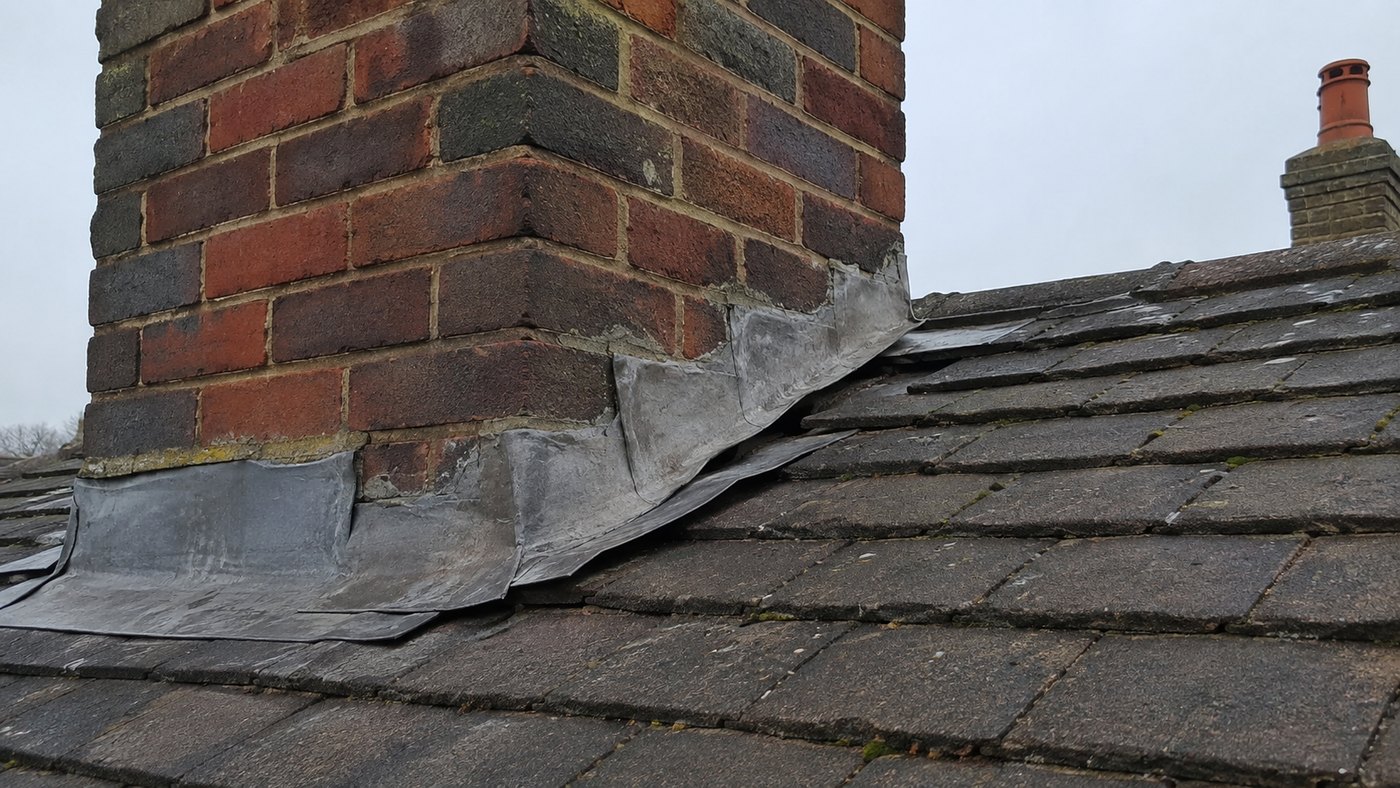
Where the water can enter
Lead flashing is supposed to turn water away from the joint between the roof and the chimney. Depending on the roof there may also be individual soakers tucked between the slates or tiles. If one part loosens, splits or has been badly fitted, water can get behind it.
The chimney itself may be involved
Cracked flaunching, open pointing and porous masonry can also admit water. That does not mean every damp chimney breast needs the stack rebuilding. The wet area, wind direction and condition of the roof junction all help narrow it down.
Watch for old patching
Bitumen and sealant around leadwork are common on roofs that have had quick repairs. Sometimes they have done a job for a while. Once they start lifting, though, they can make the next diagnosis harder because you can no longer see the original detail properly.
A proper repair should leave a readable detail
By that I mean you should be able to see how water is meant to shed away. Lead should be dressed and fixed sensibly, mortar joints should not be carrying all the responsibility, and water should have a clear route down the roof.