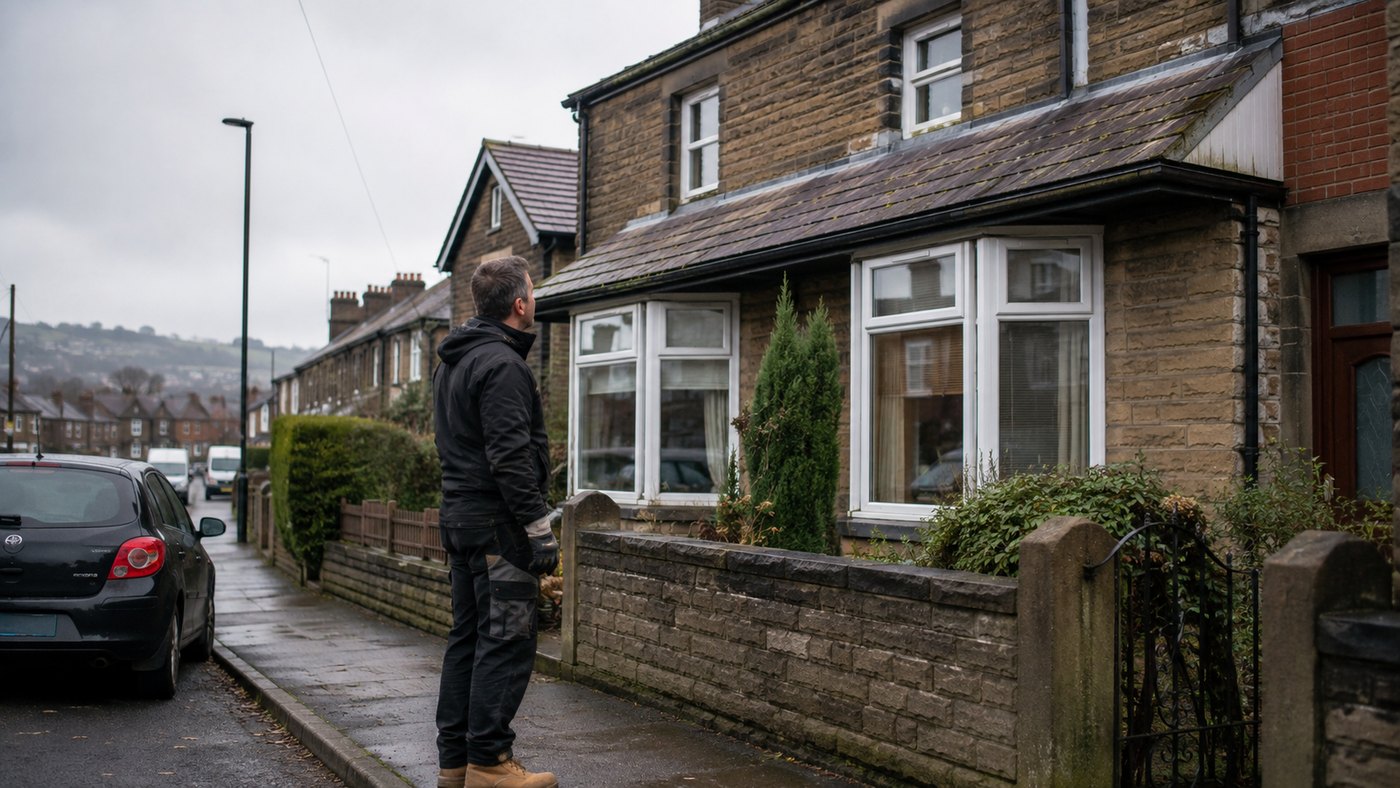
The visible defect
Start with the obvious: missing covering, split lead, blocked valley, loose ridge or damaged flat-roof surface. Then look around it. Nearby defects may explain why the visible part failed.
The route water could take
For leaks, the inspection should follow gravity and the roof construction. That may mean looking above and to the side of the internal stain, not only directly outside it.
The underside where accessible
A loft inspection can show staining, wet battens, daylight, condensation or an old leak that is no longer active. It is one of the most useful checks when access is straightforward.
Edges and drainage
Gutters, eaves, valleys and downpipes are part of the weathering system. Ignoring them can lead to roof covering being blamed for water that is arriving from somewhere simpler.
Previous repairs
Old sealant, replacement slates, patches and fresh mortar all tell a story. Sometimes the current leak is the same old fault returning because the underlying detail was never corrected.